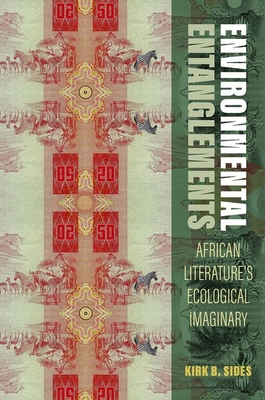
A Room of One’s Own is thrilled to welcome two local professors in celebration of their newly released academic works. Ainehi Edoro-Glines and Kirk B. Sides will be in conversation about their new books, Forest Imaginaries: How African Novels Think and Environmental Entanglements: African Literature’s Ecological Imaginary, respectively.
This is an in-person event at A Room of One’s Own Bookstore.
About Forest Imaginaries
In the tradition of works like Eduardo Kohn’s How Forests Think and Nancy Armstrong’s How Novels Think, Forest Imaginaries looks at the forest as a storytelling apparatus used by African writers to examine modern power and reinvent the novel form. Across a diverse archive ranging from indigenous African epics to science fiction, the forest is a site of wonder and excess, teeming with strange creatures, sensory overload, and radical imagination, and African writers use it to fracture narrative form, blur the line between human and nonhuman, bend time, and invent new ways of living together amid uncertainty. Moving from imperial bloodshed to utopian futures, from mythic forests to aquatic ones, Forest Imaginaries shows how African storytelling has long treated the forest as a place to confront the fragility of worlds and imagine life beyond collapse.
About Environmental Entanglements
Environmental Entanglements: African Literature’s Ecological Imaginary traces a long history of ecological thought in African literature. Reading African literatures as environmental literatures, Environmental Entanglements offers an interventional step back beyond the mid-twentieth-century moment of political independence. Thinking about ‘entanglement’ as a way to represent relations ecologically, the book explores a form that it argues is an ecological imaginary animating many African literary and cultural repertoires. This ecological form gives story to experiences of transversal of (colonial and apartheid) boundaries, the movement of peoples, and the cultural and social relations enacted upon land. Focusing on literary and filmic texts, from the writers such as Thomas Mofolo and Sol Plaatje in the early twentieth century, to contemporary science and speculative fiction producers like Nnedi Okorafor and Wanuri Kahiu, Environmental Entanglements argues that cultural archives from the African continent display a history of ecological awareness that predates the moment of mid-twentieth-century decolonization. The book is premised on the idea that imagining ecologically as a form of representing relations is not a belated preoccupation in African literatures, but rather these early ecological imaginaries present an opportunity to delink notions such as environmentalism, ecology, and ecocriticism from postcoloniality. Reading ecology as an animating, organizing trope in African literatures from at least the start of the twentieth century, the book offers a genealogy of the present, in which the increasingly popular forms of ecologically oriented Africanfuturism and speculative fiction are part of a history of thinking the future through ecological form in African literatures.
Ainehi Edoro-Glines is a Nigerian literary scholar who studies African literature and digital culture. She is a Mellon Morgridge Assistant Professor of English and African Cultural Studies at the University of Wisconsin–Madison. She is the founder and editor of Brittle Paper, a major news platform on African books and literary culture. Her research explores how stories, in novels and on social media, present new ways of thinking about the art and philosophy of worldmaking. Her first book Forest Imaginaries: How African Novels Think is forthcoming from Columbia University Press in January 2026. and her work has appeared in top academic journals like English Literary History and PMLA, as well as in mainstream platforms like The Guardian, Africa is a Country, Lit Hub, BBC World News, and SABC.
Kirk Sides is an Assistant Professor in English and an Affiliate Professor of African Cultural Studies at the University of Wisconsin-Madison. Kirk has been a Research Fellow at the University of Witwatersrand’s Institute for Social and Economic Research in Johannesburg, South Africa, a Visiting Research Scholar in the Humanities Institute at The Pennsylvania State University, as well as a Research Fellow at the Rachel Carson Center for Environment and Society in Munich. His book, Environmental Entanglements: African Literature’s Ecological Imaginary (2025) Oxford University Press, charts a long history of ecological thinking in African literatures from the start of twentieth century up to the present. An African continent edition of Environmental Entanglements was published by Wits University Press (The University of the Witwatersrand) in January 2026.
Event Related Books & Products
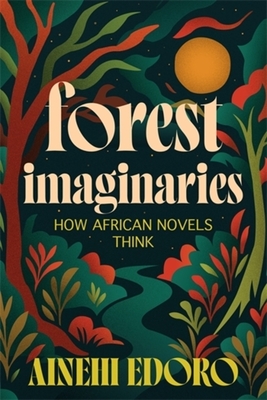
Forest Imaginaries: How African Novels Think