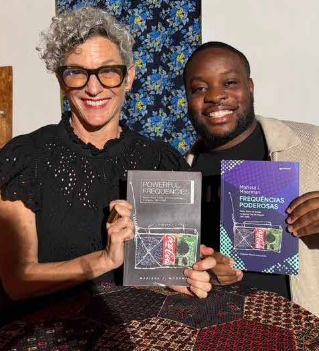
 Marissa Moorman, professor of African Cultural Studies at the University of Wisconsin–Madison, traveled to Luanda, Angola, in June to launch the Portuguese edition of her latest book, Powerful Frequencies (Frequências Poderosas). During her visit, Moorman also participated in several radio interviews and was featured in Jornal Angolano de Artes e Letras, Angola’s newspaper of arts and letters.
Published by Kacimbo, Frequências Poderosas examines the history of radio in Angola and its role in shaping political life, cultural identity and community connections. In an extensive interview with the newspaper, Moorman discussed the archival research behind the book and how radio helped people share information, engage with political ideas and develop a sense of national identity during Angola’s struggle for independence and its aftermath.
Her research draws on materials from archives in Angola and Portugal, including historical broadcast transcripts, government records and interviews with people who participated in radio broadcasting. Moorman described the challenges of researching radio history, noting that researchers often find more written documents than actual recordings. Transcripts of broadcasts from Angola Combatente and Voz Livre de Angola, for example, helped her reconstruct how different programs communicated political ideas and served communities during the independence struggle.
Moorman also reflected on radio’s continuing relevance in Angola and beyond. While broadcasting technologies have changed, she emphasized radio’s enduring ability to connect people, share local information and bring communities together.
The book builds on Moorman’s longstanding research on Angolan history and culture. Her earlier work, Os Sons da Nação, explores the relationship between popular urban music and national identity in Angola.
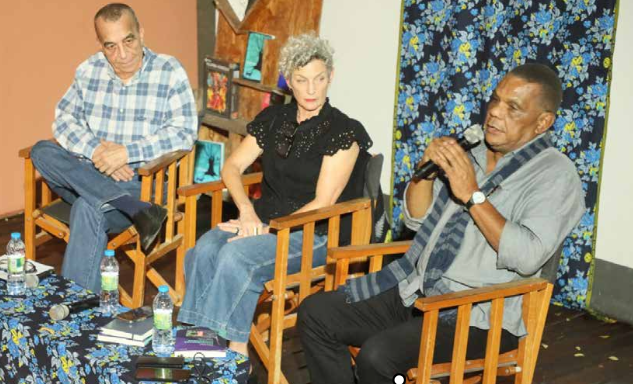
During her visit, Moorman also introduced a film related to her current research project, extending her engagement with audiences around the history and culture of Angola.
Read more about Moorman’s research in Frequências Poderosas and her interview with Jornal Angolano de Artes e Letras.