Standard models of structural transformation view manufacturing as the primary engine of economic development because it combines high productivity with the capacity to absorb labor released from agriculture. Yet many African economies have largely bypassed manufacturing, moving straight to a service-led economy, raising concerns about whether service-led development can sustain long-run growth. Can the service sector drive structural transformation and sustain economic growth? We address this question using firm panel data from Côte d’Ivoire, one of Africa’s fastest-growing “leopard” economies. Building on the structural-change decomposition, we show that services can drive structural transformation when they combine high productivity with labor absorption. Using estimates of firm-level total factor productivity, we find that services are more productive than both agriculture and manufacturing and account for the largest expansion in formal employment. We then examine the firm-level mechanisms behind this expansion. More productive service incumbents grow faster, more productive entrants expand after entry, and more productive firms are less likely to exit, with employment growth concentrated particularly among unskilled workers. Together, these findings show that productive service firms can generate sustained labor absorption and contribute to structural transformation. The results suggest that development policies should promote productive services alongside manufacturing in Africa.
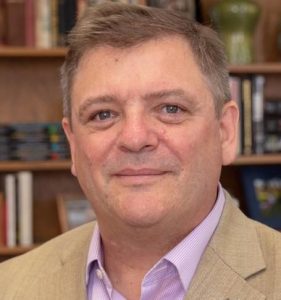
Jeremy Foltz is a Professor of Agricultural and Applied Economics and a member of the UW faculty for the past 23 years. His PhD is also from UW, with a minor in African Studies. His research work on economic development in African countries has covered the African continent including Tunisia, Mali, Ethiopia, and Zambia. His current research focuses on the economics of technology adoption and climate change resilience in the US and Africa, the economics of climate change, political economy issues related to corruption and natural resource governance in Africa, structural transformation of economies in Africa, and the economics of the research process at US universities.
The event is free and open to the public.